MORE SHELLS ARE COMING - ON SALE From JUNE To SEPTEMBER

Leaving a Legacy: The Fascinating Process of Naming a New Species
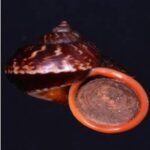
Have you ever wondered what happens when an unknown seashell is discovered? The ocean remains one of the most unexplored frontiers on Earth, and every year, striking new marine mollusks are brought to the surface. Naming a new species is a meticulous scientific journey and a prestigious milestone for anyone deeply involved in the conchology community.
The Moment of Discovery It usually begins with a keen eye. A collector or diver notices a shell whose shape, spire structure, or striking color patterns simply do not match any known field guides. However, finding a unique shell is just the first step. The specimen must be carefully preserved, as the physical shell (and ideally the preserved animal inside) will become the “holotype”—the single physical example that defines the entire species for all future scientific reference.
Scientific Verification Once a potential new species is identified, the discoverer usually collaborates with a professional malacologist (mollusk scientist) or a natural history museum. The shell undergoes rigorous comparative analysis. Scientists examine the microscopic details of the shell’s surface, its geographical origin, and sometimes its DNA, to prove beyond a doubt that it is entirely distinct from all currently recorded species.
The Rules of Nomenclature The actual naming process is governed by the International Code of Zoological Nomenclature (ICZN). The chosen name must be Latinized and unique. Often, the name honors the person who discovered it, the specific region where it was found, or a highly striking physical characteristic of the shell itself.
Publishing the Legacy The final step is formal publication. A detailed scientific description, complete with high-resolution photographs and precise measurements, must be published in a peer-reviewed scientific journal. Once published, the name becomes official. For a collector, playing a part in this process—whether by discovering the shell or assisting in its identification—is the ultimate contribution to the science of conchology, cementing their legacy in natural history forever.